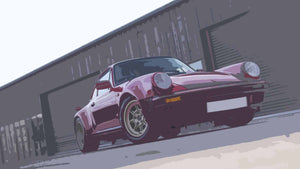


It is easy to begin a Porsche 944 search thinking the decision is simple: buy a naturally aspirated car for sensible enjoyment, or stretch to a Turbo for more excitement.
Spend a little longer looking and the choice becomes more interesting. An early 2.5, a 16-valve S and a 3.0-litre S2 are all naturally aspirated, but they are not interchangeable ownership propositions. Nor should every Turbo be judged by the same advert, modification list or reputation.
I have owned several 944s, including a 1988 944 S. That experience taught me to give the individual car as much attention as the badge. The version you love matters, but so do its maintenance, parts needs and the work waiting after you bring it home.
My starting advice: consider an eight-valve car if you mainly want the classic 944 experience, put the S2 on your shortlist if a larger naturally aspirated engine appeals, and choose a Turbo because you specifically want its character—not simply because it sits higher in a performance table.
Then compare actual cars. A well-documented example that fits your budget is a better starting point than a more desirable badge surrounded by unanswered questions.
In this guide
- The different 944 versions at a glance
- What would you enjoy on an ordinary drive?
- 944 S2 versus Turbo
- Maintenance and running-cost differences
- Everyday use, comfort and fuel
- Standard or modified?
- Which version would suit you?
- What to check before buying
- Common comparison questions
Porsche 944 Turbo vs NA: understand the choices first
“NA” means naturally aspirated: the engine does not use a turbocharger. For buying purposes, it is worth separating the eight-valve cars from the S and S2 rather than treating them as one group.
| Version | Engine and reference output | Why put it on your shortlist? |
|---|---|---|
| 944 2.5 | 2.5-litre eight-valve; outputs vary by year and market. Porsche's European history includes 150, 160 and 163 PS versions. | You want to enjoy the basic 944 shape and chassis without making maximum performance the priority. |
| 944 2.7 | 2.7-litre eight-valve for model year 1989; European reference 165 PS. | You like an eight-valve car and have found a promising example. Confirm its engine identity and any required parts. |
| 944 S | 2.5-litre 16-valve, model years 1987–1988; European reference 190 PS. | The S appeals in its own right, with the engine-specific maintenance understood. |
| 944 S2 | 3.0-litre 16-valve, model years 1989–1991; European reference 211 PS. | You want the larger naturally aspirated engine; coupé and cabriolet choices add another decision. |
| 944 Turbo / Turbo S | 2.5-litre turbocharged; Porsche quotes 220 PS for the earlier Turbo and 250 PS for the 1988 Turbo S and the regular Turbo from model year 1989. | You specifically want the turbocharged version and can accommodate its additional systems. |
PS is metric horsepower; it is not exactly the same as bhp or US mechanical horsepower. These figures follow Porsche's model-history references and should not be applied indiscriminately to US-market cars. Local availability, equipment, emissions specification and model years differ. Check the exact vehicle rather than comparing adverts with different units.
The Porsche 944 model history and Porsche Turbo history provide the factory background. The former is a German-language page.
What would you enjoy on an ordinary drive?
The eight-valve cars: let enjoyment lead the decision
If your ideal Sunday involves an interesting road, a good seating position and a car you enjoy working through the gears, I would try a sound 2.5 before assuming you need more power.
You may find it gives you the experience you wanted. You may also discover that, for your expectations or regular journeys, you want more performance. Both are useful answers. The point of a test drive is to find out, rather than prove that you chose the right badge in advance.
The S: a separate choice, not a stepping stone
I would consider a 944 S because you like that version and the particular car. Do not dismiss it simply because the S2 followed it, or assume that being naturally aspirated makes its maintenance identical to a 2.5 eight-valve.
My own S ownership included a difficult search for a breather pipe. That happened some years ago and does not establish availability now. It does explain why I would confirm the parts needed for an identified fault before agreeing a price.
The Turbo: choose the experience deliberately
If the appeal is the way performance builds with boost, a naturally aspirated car may never quite scratch that itch. There is little value in buying a different version purely to be sensible, then spending every drive wishing it were the one you really wanted.
But a Turbo should still work for the roads you use. During an appropriate test drive, consider its response at ordinary speeds, gear choice and how comfortably you can make smooth progress. More maximum output is only useful to the decision if you enjoy the complete car.
My view: test the character that attracts you. Do not use a public-road test drive to explore the limit of the tyres or prove a performance claim.
944 S2 versus Turbo: the comparison that deserves more attention
For someone wanting more than the basic eight-valve proposition, I would make room to compare an S2 and a Turbo directly. The choice is not simply between the “slow” and “fast” 944.
I would lean towards the S2 if you specifically prefer naturally aspirated response and want the larger engine without the additional turbocharging system. That is a preference about the experience, not a claim that every S2 is cheaper to maintain or a better car.
I would lean towards the Turbo if turbocharged performance is central to the attraction and the car's documented condition supports the purchase. Buying one with a repair reserve makes more sense than stretching to the asking price and hoping nothing needs attention.
Try to compare cars in similarly good condition. Worn tyres, tired dampers, poor alignment or unresolved running faults can distort your impression of a version. Do not judge the whole range from a single neglected test car.
And check what each car actually has. Suspension, brakes, wheels and previous modifications need identifying; a badge or a later-model part fitted by an owner is not a complete specification.
Maintenance: less equipment does not mean no expensive jobs
The Turbo brings extra equipment to inspect and maintain, including the turbocharger, charge-air system and associated controls and connections. That creates additional questions for an inspection. It does not tell you the annual bill without knowing the condition and history.
The naturally aspirated cars still need proper maintenance. The S and S2 also have a camshaft-chain and tensioner arrangement that deserves attention alongside belt servicing. Clark's Garage explains that 16-valve system.
For any version, ask about:
- Belt history: dated invoices, mileage and exactly what was included.
- Engine-specific work: evidence relevant to the version, rather than a generic claim that it has been serviced.
- Cooling and running: any history of overheating, fluid loss or unresolved symptoms.
- Clutch and driveline: operation, noises and previous repairs.
- Structure and dampness: corrosion, body repairs and water ingress.
- Work due next: a realistic assessment and local quotes where necessary.
A sizeable recent invoice is useful only if it identifies relevant work and the rest of the car has been assessed. “Spent thousands” is not the same as “nothing left to do”.
Compare the first year, not just the asking prices
I would compare purchase price, inspection, immediate work, insurance, expected use and a repair reserve. Get current quotes for the actual car. A cheaper example can be the right choice when its needs are understood, but it becomes difficult to budget when several major systems remain untested.
I would not choose a Turbo, S2 or any other 944 on a prediction of appreciation. Buy the experience you want at a total commitment you can support.
Everyday use, comfort and fuel
Ask yourself how you want to use the car. A weekend companion, regular motorway car and only means of transport place different demands on the purchase.
Try the seat, steering-wheel position, ventilation, visibility and access. Check air conditioning if fitted, and listen for wind noise or exhaust drone. A version you love on paper can still be the wrong individual car if the equipment you value is missing or does not work.
On fuel economy, compare the same units and similar journeys. UK and US mpg use different gallons, and a best-case cruising figure is a poor basis for budgeting short trips. I would allow for the way you intend to drive, rather than choose solely from the most flattering number in an advert.
If this will be your only car, consider how you would manage a workshop visit or a delayed part. That question matters for every version, including the apparently simpler one.
Should you buy a standard or modified 944?
A thoughtfully improved car can be attractive. A long parts list, however, tells you less than the reason behind it and the quality of the installation.
My own steering-wheel and short-shifter changes made a noticeable difference to how I enjoyed my 944. That does not make every aftermarket wheel or linkage a benefit to every buyer. Check suitability for you and the actual car.
On a tuned Turbo, ask for the complete specification, who carried out the work, supporting maintenance and any relevant calibration or test records. An advertised power figure does not establish drivability, reliability or the condition of the driveline.
Check applicable insurance and local road-use requirements. Include the cost of reversing changes you do not want; the original parts may no longer be included.
My view: I would rather see a coherent, documented specification than a mixture of expensive components with no clear explanation of how they work together.
If you are assessing an upgraded example or planning changes after buying, the 944 Upgrade Planner ebook explores reliability, handling, comfort and sensible performance. Choose the digital edition from Retro Outlaws or the Upgrade Planner paperback on Amazon. It is a decision guide, not fitting instructions.
Which Porsche 944 would suit you?
- You mainly want the classic shape and driving experience: start by trying a sound eight-valve car. Decide whether its performance satisfies you before paying for more.
- You are drawn specifically to the S: include it, with model-specific maintenance and any required parts checked. Another owner's difficult repair is not a verdict on every example.
- You want a larger naturally aspirated engine: put the S2 high on the shortlist and compare its actual condition and total cost with the alternatives.
- You have always wanted the Turbo: find out whether its everyday character matches the attraction, then budget for a properly inspected example and the work it needs.
- Your available budget only covers the purchase: pause and allow room for inspection, immediate work and unforeseen repairs, whatever the badge.
There is no need to apologise for choosing the less powerful car if you enjoy it more. Equally, wanting the Turbo is a perfectly reasonable preference when the commitment fits your life.
Before choosing a particular car
Use the comparison to decide what to view, then switch your attention to the car in front of you. Confirm its identity, history, equipment and modifications, and arrange a safe, appropriately insured test drive where possible.
I would make room for an independent inspection by someone familiar with the range. Agree its scope: concealed corrosion, intermittent faults and untested systems can still leave uncertainties.
Our Porsche 944 buyer's guide article covers the wider viewing questions. For symptoms that need further investigation, see our 944 common-problems guide.
Want a more detailed guide beside you? The 944 Buying Guide — Choosing, Owning and Enjoying a 944 brings together model choices, ownership considerations, viewing advice and a compact checklist. Choose PDF and EPUB from Retro Outlaws or the Buying Guide paperback on Amazon. Digital and paperback editions are purchased separately.
Porsche 944 Turbo vs NA: common questions
Is the 944 S2 turbocharged?
No. The factory S2 uses a naturally aspirated 3.0-litre, 16-valve engine. It should not be grouped with the eight-valve cars simply because both are described as NA.
Is every 250 PS Turbo a Turbo S?
No. Porsche's history records the 250 PS Turbo S for model year 1988, followed by that engine in the regular Turbo from model year 1989. Confirm the actual model, market and specification rather than identifying a Turbo S from an output claim alone.
Is an NA 944 always cheaper to maintain?
No. Avoiding turbocharging removes that system from the inspection, but condition and outstanding work still matter. An S or S2 also has its own 16-valve maintenance considerations. Compare the cars and their documented needs.
Should a first-time classic owner avoid the Turbo?
Not automatically. I would focus on a realistic budget, specialist support, a thorough inspection and whether you enjoy the car in normal use. A neglected eight-valve car is not made suitable merely by having less power.
Choose the character, then choose the car
The best outcome is a 944 you look forward to driving and can afford to keep in good condition. Try the versions that interest you, be honest about what you enjoy, and leave enough budget for ownership after the purchase.
If you own one, share the version and the kind of driving you use it for in the comments. What made you choose it—and what would you want a prospective buyer to understand?
By Martin Henry, Retro Outlaws. Personal ownership references relate to the experiences described, not a claimed road test of every variant. Factory model information is linked above; driving preferences and purchasing recommendations are editorial opinions. This is an independent enthusiast comparison, not a valuation, workshop manual or substitute for inspection. Retro Outlaws is not affiliated with Porsche AG.