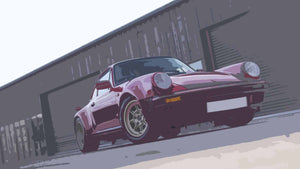


A Porsche 944 does not have to be perfect to be enjoyable. But it helps to know which jobs can be planned, which symptoms need investigating and when the sensible next step is to stop driving.
My own 944 ownership included a 1988 944 S, water leaks and a surprisingly involved search for a breather pipe. Those experiences taught me to ask better questions before buying parts. A small-looking fault can take time to resolve, while an alarming symptom does not always have the explanation you first expect.
This guide covers five useful areas to understand: belt maintenance, oil leaks, electrical faults, cooling problems and clutch operation. They are not a ranking of every fault a 944 can develop. Base cars, S, S2 and Turbo models also have differences that matter when diagnosing a problem or ordering parts.
The aim is to help you describe the problem and choose a sensible next step. It is not a workshop procedure or a way to diagnose a car from one noise, smell or gauge reading.
Quick guide: what have you noticed?
| Concern | Useful next step | Avoid assuming |
|---|---|---|
| No reliable record of belt servicing | Arrange a specialist assessment and establish the work due before relying on the car. | Low mileage or quiet running proves the belts are safe. |
| Oil drips or a burning smell | Identify the fluid, source and any contamination of nearby components. | The component nearest the drip must be leaking. |
| Intermittent equipment or a repeatedly blown fuse | Record the circumstances and have the relevant circuit tested. | A new relay or a higher-rated fuse is the answer. |
| Abnormal temperature rise, steam or coolant loss | Stop safely if overheating is suspected; allow cooling and arrange diagnosis. | A thermostat, radiator or head gasket can be identified from the gauge alone. |
| Pedal problems, slipping or difficult gear selection | Distinguish hydraulic operation, clutch release and other driveline faults. | Every gear-selection problem needs a complete clutch replacement. |
Stop and arrange assistance if there is suspected overheating, an oil-pressure warning while running, a fuel leak, smoke or a burning electrical smell, unsafe steering or braking, or loss of clutch control that makes driving unsafe. Do not keep driving simply to gather more evidence.
In this guide
- Timing belts, water pump and 16-valve maintenance
- Oil leaks and breather problems
- Electrical faults and repeated fuse failures
- Overheating and coolant loss
- Clutch, hydraulics and gear selection
- Water leaks and other concerns
- How to get a useful repair estimate
- Which guide fits your next decision?
1. Timing belts, water pump and 16-valve maintenance
This is an area where records are more useful than reassurance. Ask when the timing and balance-shaft belts were last serviced, at what mileage and which related components were checked or replaced.
Do not wait for a particular noise before investigating an uncertain history. Equally, a whine does not identify a worn belt: noises need proper assessment. Low use does not remove the need to consider time as well as mileage.
What should you do next?
Have a knowledgeable specialist establish the appropriate maintenance for the actual engine and its history. Ask for the scope of the job, including belts, rollers, tensioning components, water-pump condition and any leaks that could affect the work. Do not assume a belt-only price includes everything that needs attention.
On the 944 S and S2, include the camshaft-chain system, tensioner and guide-pad condition in the discussion. These 16-valve engines need more consideration than simply applying an eight-valve service description.
Clark's Garage explains belt maintenance and component differences, while its 16-valve chain-and-tensioner guide explains that additional system. These are technical background, not a substitute for a current maintenance plan for your car.
My view: if the paperwork cannot establish what has been done, treat that as work to resolve. A seller saying “it has hardly been driven” does not answer the question.
2. Oil leaks and breather problems
A drip on the floor tells you there is something to investigate. It does not tell you which seal to buy. Fluid can travel across the engine or along other surfaces before falling to the ground.
Record where the car was parked, whether the leak appears after running and whether the level is changing. If you notice a burning smell, smoke, a sudden increase in leakage or an oil-pressure warning, do not treat it as an ordinary old-car inconvenience.
What should you do next?
Have the fluid and source identified. Front-engine seals, other sealing joints and breather components may need checking, but an inspection should determine which applies. Clark's Garage's buying notes discuss oil around the belt area and possible front crankshaft or balance-shaft seal leaks.
Ask whether oil has reached the belt area or hot components, and whether related work would sensibly be done together. Controlled cleaning may help trace a leak, but I would not recommend indiscriminately pressure-washing an old engine bay and its electrical equipment.
My 944 S taught me another useful lesson: identify the exact part before assuming a hose will be a cheap, immediate fix. A breather pipe needed during my ownership took some sourcing. That was some years ago, so it does not establish availability today; it does explain why I would check the part number, price and lead time first.
My view: pay for a diagnosis that identifies the source. Replacing the most accessible seal and hoping is an unsatisfying way to spend the budget.
3. Electrical faults and repeated fuse failures
With an intermittent electrical fault, the details matter. Does it happen when cold, after rain, with several accessories switched on or only when a particular switch is used? Are several items failing together?
A relay is one possibility, alongside the supply, connections, wiring and the equipment itself. The right circuit information matters because the layout differs across the range. Clark's Garage's electrical troubleshooting guide shows why different symptoms need different checks.
What should you do next?
Record exactly what fails and when. Give an auto electrician or specialist the model, year and details of any alarm, stereo or other aftermarket wiring. If moisture is involved, investigate its source as well as the affected circuit.
Repeated fuse failure needs diagnosis. Do not fit a higher-rated fuse, bypass protection or keep replacing fuses without addressing the cause. Stop using equipment that produces smoke, unusual heat or a burning smell.
My view: a short video and a clear description of an intermittent fault can be more useful than a box of relays bought on somebody else's recommendation.
4. Overheating and coolant loss
A temperature gauge behaving differently from normal deserves attention. Note the conditions if you can do so safely: traffic, a steady journey, recent work or visible fluid loss. Do not continue driving a car that appears to be overheating to see whether the problem clears.
Cooling-system faults have several possible explanations. Clark's Garage lists coolant level, fan operation, air in the system, thermostat issues and other faults among the things to investigate. That is why “it needs a radiator” or “it must be the head gasket” is too quick a conclusion.
What should you do next?
Stop safely if overheating is suspected, switch off and arrange assistance as needed. Never open a hot coolant cap. Keep hands clear of cooling fans, which may operate unexpectedly.
Ask the workshop to establish the cause, including appropriate leak and fan checks, the suitability of fitted components and correct filling and venting where relevant. A fresh coolant fill does not prove that the original fault has been repaired.
My view: repair the diagnosed fault before buying cooling upgrades. A bigger radiator cannot be assumed to solve every reason for abnormal temperature.
For technical background, see Clark's Garage cooling-system troubleshooting.
5. Clutch, hydraulics and difficult gear selection
A pedal that does not return properly, slipping under load and difficulty selecting a gear are different observations. Describe what the car actually does rather than asking for a clutch kit before it has been checked.
The hydraulic system, clutch release and other driveline components need to be considered as appropriate. Gear crunch is not proof of one particular failure. Clark's Garage's clutch troubleshooting guide separates possible causes and checks.
What should you do next?
If clutch operation makes the car unsafe to control, stop using it. Ask a specialist to distinguish a hydraulic or release problem from wear or damage requiring more extensive work.
When replacement is needed, request an itemised estimate. The 944 clutch replacement procedure illustrates why labour is a substantial part of the job. The exact car, equipment and condition influence the scope; the parts-kit price is not the installed bill.
Discuss any related work once its condition has been assessed, rather than assuming every nearby component needs replacement or that all additional labour will be negligible.
My view: understand the fault first, then price the complete repair. A shorter gear change or new linkage part cannot repair worn gearbox internals.
What else deserves attention?
Water leaks and damp carpets
Check more than the carpet surface. Moisture can collect underneath and travel away from its entry point. Trace and repair the leak before fitting new carpet or sound-deadening materials.
My Porsche 944 water-leaks guide shares the areas I investigated and a measured approach to finding the source.
Structure, steering, brakes and tyres
A common-problems list is not a complete inspection. Corrosion, previous accident repairs and the condition of safety-critical components deserve attention regardless of whether the engine runs well. Unsafe braking, steering play or concerning structural damage needs professional assessment before further use.
A car returning from storage
A long-stored car needs an assessment before an attempted start or drive. If that is your situation, our 944 restoration and recommissioning article is the better next read.
How to get a useful Porsche 944 repair estimate
A useful price needs a defined job. A base car and a Turbo, an accessible leaking connection and a seal requiring extensive dismantling, or a routine service and a repair to damaged components are different propositions.
Before agreeing work, ask:
- What has been diagnosed? Separate the confirmed fault from the possibilities still being investigated.
- What does the quote include? Check parts, labour, tax, fluids, consumables, testing and any outsourced work.
- Which parts will be used? Confirm compatibility, availability and the expected lead time.
- What remains uncertain? Agree how the workshop will contact you if dismantling reveals additional work.
- How will the result be checked? Understand how the original symptom will be assessed after repair.
Ask whether related jobs share access, but do not assume that makes the extra work free. Keep a reserve for findings that could not reasonably be confirmed at the outset.
Choose the guide that fits your next decision
Still deciding whether to buy a 944?
The 944 Buying Guide ebook explores model choices, ownership considerations and viewing checks, helping you ask better questions before committing. Choose the digital edition from Retro Outlaws or the 944 Buying Guide paperback on Amazon.
For a free introduction, read our Porsche 944 buyer's guide article.
Already own one and deciding where to spend?
The 944 Upgrade Planner ebook looks at reliability, handling, comfort and sensible performance, helping you weigh worthwhile changes once maintenance needs are understood. There is also an Upgrade Planner paperback on Amazon.
These are decision guides, not diagnostic manuals or fitting instructions. Digital and paperback editions are purchased separately.
Understand the job before you buy the parts
The rewarding part of 944 ownership is getting back to enjoying the car. A clear description, a sound diagnosis and a properly scoped repair give you a better route there than treating every symptom as a familiar fault.
If you share an experience in the comments, include the model, year, original symptom, confirmed cause and what fixed it. That distinction helps the next owner much more than “mine did that too”.
By Martin Henry, Retro Outlaws. This is an independent enthusiast overview, not an exhaustive fault list, workshop procedure or remote diagnosis. Personal experiences do not establish the condition of another car. Technical references are linked for background; use the correct workshop information and suitably competent assistance for the actual vehicle. Retro Outlaws is not affiliated with Porsche AG.