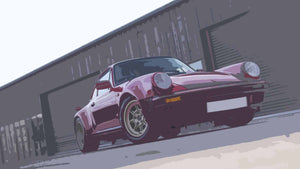


A better Porsche 944 doesn’t have to be a faster Porsche 944. Sometimes it’s the car that changes gear more neatly, feels more settled over a rough road or lets you arrive after a motorway journey without wishing you’d brought earplugs.
That’s where I’d start with Porsche 944 upgrades for a road car: what would make you enjoy your particular car more?
During my own 944 ownership, a MOMO steering wheel and a short shifter made a noticeable difference to how the car felt. An ECU chip I tried was much less convincing. That isn’t a controlled comparison or a verdict on every product, but it taught me something useful: the modification with the biggest promise isn’t necessarily the one you appreciate most.
This guide looks at where I’d spend first, which options deserve more thought and how to avoid turning an enjoyable classic into an expensive collection of parts that don’t quite work together.
Want to build a complete plan? The 944 Upgrade Planner ebook takes these decisions further, with options, compromises and planning sheets. Both PDF and EPUB editions are included.
Prefer a physical book? The 944 Upgrade Planner paperback is available on Amazon, so you can keep a copy beside you while planning your car’s upgrades.
Which 944 upgrades would I prioritise?
For a car mainly used on the road, this would be my starting order. It’s a spending priority, not an installation sequence: anything affecting safety comes first.
- Establish the car’s condition. Resolve maintenance gaps, leaks and safety concerns before buying performance parts.
- Sort the tyres and worn chassis components. Find out how well the car drives when its existing equipment is working properly.
- Improve the controls you use every journey. Investigate a vague gear change, uncomfortable driving position or tired seat.
- Choose suspension and brake changes for your actual use. A road car needs to work on roads, including the imperfect ones.
- Address cabin comfort. Investigate noise, water ingress, ventilation and audio before assuming a classic must be tiring.
- Consider extra power once the rest is ready. Be clear about the result you want and the full cost of achieving it.
Already happy with your car’s reliability and handling? You can move on. If the service history is uncertain or the steering feels wrong, that’s the place to spend your attention first.
In this guide
- Reliability before modifications
- Short shifters and gear linkage
- Steering wheels and driving position
- Tyres, wheels and suspension
- Brake upgrades
- ECU chips, intakes and exhausts
- Six-speed gearboxes and differentials
- Sound deadening and cabin comfort
- Bodywork and cosmetic upgrades
- Build your upgrade plan
- Common questions
1. Reliability: restore the car before you upgrade it
It’s tempting to buy something exciting when the less glamorous job is catching up with maintenance. I’d resist that temptation until you know what you’ve bought.
Establish the condition and documented maintenance of the engine, cooling system, fuel system, brakes and chassis. Timing-belt servicing deserves particular attention; the exact requirements depend on your engine and the applicable workshop information. A specialist inspection can help separate urgent work from things you can sensibly plan.
A tired component can make a perfectly reasonable factory setup feel disappointing. Replacing worn dampers or addressing play in the suspension is a different decision from making an already healthy car firmer.
My view: spend the first part of the budget finding out whether the car needs restoring, modifying or a little of both. Keep a repair reserve rather than committing every pound or dollar to accessories.
2. A short shifter: improve the gear change you already have
This is one of the changes I appreciated on my own car. The standard throw felt long to me, and the shorter movement made changing gear more satisfying.
Before buying a kit, distinguish excessive play from a shift pattern you simply find too long. Worn linkage parts and adjustment problems need their own attention; a short shifter doesn’t repair worn gearbox internals.
Only944’s short-shifter product page describes a rear linkage that reduces movement, rather than merely changing the cabin gear knob. Check its current application information and installation instructions for your car.
Worth considering if: you like the existing gearbox but want a more compact shift action. I’d investigate linkage condition and a suitable short-shift option before paying for a major gearbox conversion. A shorter throw may also change the effort and feel, so the shortest possible shift isn’t automatically the nicest.
3. A steering wheel and driving position that suit you
The MOMO wheel I fitted changed the experience because it changed a part of the car I held throughout every drive. That’s a worthwhile reminder: enjoyment isn’t measured only in horsepower.
Think about wheel diameter, rim thickness, dish, reach and whether you can still see the instruments clearly. A smaller wheel can alter steering effort, and an attractive wheel can still leave you sitting awkwardly.
I’d sort the seat position and pedal reach before deciding what the wheel needs to change. If the original seat needs repair, that may be the more useful first purchase.
My view: a well-chosen wheel can be a lovely upgrade, but fitment, the correct hub and the car’s restraint equipment matter. If the car has an airbag, don’t treat removing it as a cosmetic decision. Have the safety, insurance and road-use implications assessed before changing anything.
4. Tyres, wheels and suspension: aim for confidence, not just stiffness
Choose tyres for the roads and weather you use
I’d look at tyre suitability and condition before chasing more dramatic suspension changes. A road car needs predictable behaviour in the conditions you actually encounter, rather than a tyre chosen purely for its track-day reputation.
Check the correct sizes and ratings for the specific car and wheel combination. When changing wheels, confirm width, offset, clearance and compatibility with the brakes and hubs. A wheel advertised as fitting a 944 isn’t enough detail by itself.
Refresh first; choose coilovers for a reason
Coilovers are an option, but they wouldn’t be my automatic recommendation for every owner. Ask what you need that a good-quality refresh of the existing suspension can’t provide.
For a weekend road car, I’d favour a coherent setup with enough compliance to enjoy an uneven lane. A lower car that catches the road or makes you tense over every bump hasn’t necessarily become a better one.
Anti-roll bars, spring rates, damping and alignment should be considered together. Changing one part because it came from a higher-performance model doesn’t prove the resulting balance will suit yours.
My view: establish a healthy baseline, describe the behaviour you want to change, then discuss the complete setup with someone who understands these cars. Treat chassis braces as a response to an identified need, rather than a guaranteed transformation.
5. Brake upgrades: start with condition and use
For a road-driven 944, my first question is whether the existing braking system is operating correctly. Investigate an inconsistent pedal, pulling, sticking components or other concerns before shopping for larger hardware.
Pad choice should match the intended use. A compound aimed at sustained track work may bring compromises that you don’t want on a cold, wet journey to work.
I wouldn’t choose discs simply because they are drilled or grooved, or assume braided hoses alone will solve a poor pedal. Decide what problem needs fixing, then select suitable components as part of the whole system.
My view: restore confidence first. If your use genuinely exceeds the existing setup’s capabilities, plan the upgrade with a competent specialist, including wheel clearance and system compatibility.
6. Porsche 944 ECU chips, intakes and exhausts: keep expectations grounded
Are ECU chips worth it?
I tried a chip that was supposed to improve power and didn’t feel it delivered much. That was my experience of one installation, not evidence that every chip is ineffective.
Before spending, ask what evidence supports the particular product on your engine and DME version. Does it require a particular fuel grade or other modifications? Are quoted results measured at the wheels or engine, and was there a comparable before-and-after test?
I’d want those answers before treating a chip as an easy power purchase. Naturally aspirated and Turbo cars need separate consideration; a tuning claim for one isn’t evidence for the other.
Intakes and exhausts: be honest about what you want
There’s nothing wrong with wanting a more enjoyable sound. Just keep that separate from a measurable performance improvement.
An intake or exhaust can change the character of the car, but I wouldn’t budget around an unsupported horsepower claim. For an exhaust, ask about motorway drone as well as the sound under acceleration. Check noise and emissions requirements before choosing the system.
A throttle-response cam changes feel, not engine output
A throttle cam changes the relationship between pedal movement and throttle opening. Only944 explicitly says its P14 throttle-response cam adds no horsepower and lists specific applications and exclusions. Don’t assume the same part fits a base 944, S, S2 and Turbo.
My view: for a naturally aspirated road car, I’d usually prioritise condition, controls and chassis feel before chasing modest bolt-on power claims. Higher-compression pistons, major engine work and Turbo development belong in a properly costed project, with the supporting systems included.
7. Is a six-speed gearbox conversion worth considering?
Possibly—but “six speeds” tells you less than you might think. What matters is the gearing and how the complete conversion fits your car and intended use.
If your goal is a more relaxed motorway cruise, establish the proposed top-gear ratio, final drive and tyre size before assuming the extra gear will reduce engine speed. If you want closer ratios, decide whether the benefit justifies the cost and complexity.
I’d ask a supplier or specialist for a complete compatibility assessment and installed quote, covering the actual gearbox, condition, mounting, linkage, driveline interfaces and any other required changes. A donor gearbox’s purchase price is only one part of the decision.
A limited-slip differential deserves the same approach: identify the traction problem and intended use before choosing a solution.
My view: a healthy existing transmission and a gear change you enjoy would come first. I’d only pursue a conversion with a specific result in mind and a complete plan for achieving it.
8. Sound deadening and cabin upgrades: make longer journeys nicer
A quieter cabin can be more useful than another performance part if you regularly cover distance. But start by identifying the noise.
Wind noise, exhaust drone, tyre noise, loose trim and mechanical faults aren’t the same problem. Check seals, water ingress and the source of the sound before covering the interior with material. Sound deadening isn’t a repair for a mechanical fault or a leaking hatch.
For a road car, I’d favour targeted treatment using suitable automotive materials over adding weight everywhere. Keep drainage, access, ventilation and moving mechanisms clear, and address dampness or corrosion before covering panels.
Working heating and ventilation, comfortable seats and a sensible audio upgrade can also make the car easier to enjoy. If a period-style infotainment unit appeals, Porsche Classic Communication Management is one option to investigate alongside other suitable single-DIN units. Confirm the correct regional version and installation requirements rather than assuming universal plug-and-play fitment.
My view: choose the comfort improvements that solve your regular frustrations. A road car you’re happy to take on a longer journey is often a more useful result than one that looks impressive on a parts list.
9. Bodywork and cosmetic upgrades: choose the look, check the fit
Wheels, mirrors, spoilers and interior trim are personal choices. If a change makes you turn back for another look after parking, that has value too.
What I wouldn’t do is assume a part from a related Porsche model will fit neatly or improve cooling or aerodynamics simply because it looks more purposeful. Check the exact parts, mounting, wiring where relevant and any bodywork required.
My view: reversible changes are attractive on a tidy road car. Keep usable original parts where practical, and include fitting and finishing in the budget before buying the tempting bargain.
Build a 944 upgrade plan before you fill the basket
If I were starting again, I’d write down three things: what I love about the car, what frustrates me and how I actually use it. That’s a better shopping brief than “make it better”.
- For weekend road drives: I’d prioritise condition, suitable tyres, steering and shift feel, then suspension changes with a clear purpose.
- For regular longer journeys: I’d put reliability, seating, ventilation and noise investigation ahead of a louder exhaust.
- For occasional track days: I’d get specialist advice on preparation, braking, tyres and the compromises that still need to work on the journey home.
Allow for labour, alignment, consumables, fitting surprises and any required insurance changes—not just the headline price of the part. Change one area at a time where practical, then give yourself time to judge the result.
Take the next step with the 944 Upgrade Planner
The 944 Upgrade Planner: Reliability, Handling and Sensible Performance for Your Road Car expands these topics into a practical decision guide, with clear opinions, alternatives, trade-offs and planning sheets to help organise your spending.
Choose the format that suits you:
- Digital edition — PDF and EPUB: Both formats are included. Read the PDF on a computer or tablet and print the planning sheets, or use the EPUB in a compatible ebook app. No physical book is shipped with this option.
- Paperback edition — buy on Amazon: Prefer a physical copy to read, refer back to and keep with your project notes? Choose the paperback, purchased separately through Amazon.
Porsche 944 upgrade questions
What should I upgrade first on a Porsche 944?
First establish the car’s maintenance and safety condition. Once that is understood, I’d usually look at tyres, worn chassis components and the controls you use on every drive before buying extra-power parts.
Will a short shifter fix a worn gearbox?
No. A short-shift mechanism changes shift movement. Linkage wear, adjustment and internal gearbox faults need diagnosis in their own right.
Do 944 upgrades fit every model?
Don’t assume they do. Confirm the model, year, market, actual equipment and any previous modifications. Base cars, S, S2 and Turbo applications can differ.
Should I fit coilovers to a road-going 944?
Only if they suit the result you want. I’d compare a suitable coilover setup with a refresh of the existing suspension, including comfort, clearance, adjustment and the complete installed cost.
Can a 944 be more comfortable without losing its character?
That would be my aim. Addressing noise sources, seating, ventilation and worn components can be a more satisfying direction than making every part of the car more aggressive.
Is the 944 Upgrade Planner available as a paperback?
Yes. You can buy the 944 Upgrade Planner paperback on Amazon. If you prefer digital reading, the Retro Outlaws ebook includes both PDF and EPUB editions.
Still choosing a car—or looking for something for the next meet?
If you’re still deciding which version to buy, start with our Porsche 944 buying guide ebook. For clothing and accessories, browse the Retro Outlaws 944 collection.
About the author: Martin Henry writes Retro Outlaws’ independent enthusiast guides. His own 944 ownership informs the personal experiences in this article; those experiences are distinguished from supplier information and general planning advice.
This article is a planning overview, not fitting instructions. Confirm parts compatibility and applicable road-use, emissions and insurance requirements before modifying your car. Have safety-critical work assessed and checked by suitably competent people. Retro Outlaws is independent of Porsche AG and the suppliers mentioned.