
Porsche 944 V8 Swap Guide: LS Engines, Costs, Kits & What You Need to Know
Title: Porsche 944 V8 Swap Guide: LS Costs, Kits & Planning
Meta Description: Planning a Porsche 944 V8 swap? Compare LS, Coyote and European V8 routes, realistic costs, swap kits, driveline, cooling, wiring and project risks.
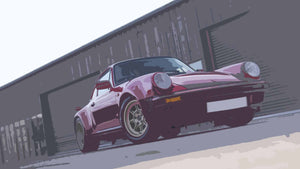
When I bought my 1988 Porsche 944, one of the things that immediately stood out was just how well the chassis worked.
The steering, balance and front-engine/rear-transaxle layout give the 944 a character that still feels special decades later.
But it also raises an obvious question:
What would this chassis be like with substantially more power?
That is why the idea of a Porsche 944 V8 swap has attracted enthusiasts for years.
The Chevrolet LS family is the best-known route, but it is not the only option. Ford Coyote engines and various European V8s can also create fascinating builds.
The important point is that a successful conversion involves much more than finding an engine that physically fits.
The engine, driveline, cooling, wiring, fuel system, brakes, suspension and intended use all need to work together as one finished car.
This guide looks at the major decisions you should understand before attempting a 944 LS swap or other V8 conversion — including engine choice, realistic costs, swap kits, transaxle considerations, cooling, wiring and project difficulty.
Planning a 944 V8 Swap?
We created the 76-page 944 V8 Swap Blueprint for enthusiasts who want to plan the complete project before spending serious money.
It covers engine selection, realistic budgets, driveline, cooling, wiring, brakes, suspension, three complete build philosophies, project-readiness checks and printable worksheets.
View the 944 V8 Swap Blueprint →
“Buy the paperback on Amazon”, linking to:
https://www.amazon.com/dp/B0HLT9HTYH
Independent enthusiast publication. Interactive digital PDF download.
Is a Porsche 944 V8 Swap Actually a Good Idea?
For the right owner, absolutely.
But whether the conversion makes sense depends much more on what you want the finished car to be than on which engine produces the biggest horsepower figure.
A well-planned V8-swapped 944 can potentially combine:
-
Strong naturally aspirated torque
-
Relatively low vehicle weight
-
Excellent steering and chassis feedback
-
Rear-transaxle balance
-
Modern engine-management capability
-
Considerably greater straight-line performance
But adding the engine is only one part of the conversion.
The torque still has to travel through:
Engine → clutch → torque tube → transaxle → differential → axles → tires
At the same time, you need to solve:
Cooling → fuel → exhaust → wiring → ECU → brakes → suspension → instrumentation → safety
This is why two V8-swapped 944s using similar engines can end up being completely different cars.
One may feel integrated, reliable and enjoyable.
Another can become an expensive collection of parts that never quite becomes a finished vehicle.
The basic rule:
Start with the finished car in mind — not the engine on the garage floor.
Why the Porsche 944 Works as a V8 Platform
The 944 uses a front-mounted engine with the gearbox and differential mass located at the rear.
That architecture helped Porsche create a car known for excellent balance and predictable handling.
For a V8 conversion, it creates both advantages and challenges.
Why enthusiasts choose the 944
The platform gives you:
-
Strong chassis fundamentals
-
Rear-transaxle layout
-
Excellent steering feel
-
Relatively modest vehicle weight
-
Established enthusiast knowledge
-
Existing conversion hardware for some engine routes
A compact aluminum V8 can also avoid the dramatic nose-heavy transformation sometimes assumed when people hear the words “V8 swap.”
But engine weight alone does not determine the result.
Accessories, exhaust, cooling equipment, battery position, suspension condition and the final weight distribution of the completed vehicle all matter.
More importantly, dramatically increasing torque puts greater demands on everything downstream of the engine.
That does not mean every original component automatically needs replacing.
It means every major component needs evaluating.
Chevrolet LS vs Ford Coyote vs European V8
There is no universally correct engine for a 944.
The best engine is the one that supports the type of car you actually intend to finish.
Chevrolet LS
The LS remains the obvious starting point for many 944 V8 conversions.
Advantages include:
-
Compact external dimensions
-
Strong naturally aspirated performance
-
Huge aftermarket support
-
Excellent parts availability, especially in North America
-
Established conversion knowledge
-
Factory and aftermarket ECU options
-
Existing 944-specific conversion hardware
LS1, LS2 and LS3-based packages are among the familiar choices.
However, “LS” is not a complete specification.
Engine generations can differ in electronics, crank and cam sensing, throttle strategy, accessory drives and management requirements.
Before buying an engine, identify exactly what it is and exactly what comes with it.
A cheap incomplete engine can quickly become more expensive than a higher-priced complete package.
Ford Coyote 5.0
The Coyote offers a very different character.
It is a modern DOHC V8 capable of strong naturally aspirated performance and high-rpm character.
Advantages include:
-
Modern engine architecture
-
Strong factory output
-
Excellent drivability potential
-
Manufacturer control-pack options
-
Distinctive engine character
The major challenge is packaging.
A Coyote is considerably broader across the cylinder heads than an LS, which makes steering, exhaust and engine-bay clearance more demanding.
Electronics are also generation-specific.
A Gen 1, Gen 2, Gen 3 and Gen 4 Coyote should not be treated as the same installation simply because all carry the 5.0 Coyote name.
For many first-time builders, a Coyote conversion should therefore be considered a higher-complexity project than a well-established LS route.
European V8 Options
European V8s can produce some of the most interesting and individual conversions.
They may appeal if you want:
-
A European engine
-
Something less common
-
Different sound and character
-
A more engineering-led project
The trade-off is normally greater development work.
Conversion hardware may be less standardized, which means more responsibility for solving mounting, electronics, exhaust, serviceability and packaging yourself.
That doesn't make the route wrong.
It simply means you need to want the engineering challenge as much as the finished car.
How Much Does a Porsche 944 V8 Swap Really Cost?
This is one of the most important questions — and one of the easiest to underestimate.
It is tempting to add together:
Engine + swap kit
and believe you have priced the conversion.
You haven't.
A complete project may also require:
-
Engine accessories
-
Clutch and flywheel
-
Torque-tube interface
-
Transaxle work
-
Cooling system
-
Fans and controls
-
Fuel system
-
ECU and harness
-
Electrical power distribution
-
Exhaust
-
Steering-clearance solutions
-
Instrumentation
-
Brakes
-
Suspension
-
Tires
-
Servicing
-
Fabrication
-
Calibration
-
Heat protection
-
Alignment
-
Fluids and fasteners
-
Troubleshooting
This is the difference between a running engine installation and a completed vehicle.
Realistic planning ranges
For the 944 V8 Swap Blueprint, we use the following broad planning bands, excluding the purchase price of the donor car:
Street-Focused Build
$20,000–$33,000 (£17,000–£28,000)
Typically aimed at approximately 300–375 hp, with road usability and manageable complexity taking priority.
Dual-Purpose Road / Track Build
$34,000–$52,000 (£28,000–£45,000)
Typically around 375–450 hp, with increased thermal, chassis and driveline requirements.
Specialist / Track-Focused Build
$55,000–$90,000+ (£45,000–£80,000+)
For more developed builds where sustained performance, specialist fabrication and higher system capability become increasingly important.
These figures are planning guidance, not quotations.
Actual cost depends on the condition of the donor, engine choice, labor, geography, fabrication requirements and how ambitious the finished specification becomes.
A useful rule:
Do not begin when you can afford to install the engine. Begin when you can credibly afford to finish the car.
Before You Start Buying Parts
The complete 944 V8 Swap Blueprint includes project budget frameworks, contingency planning, three complete build specifications, an engine-package worksheet, donor inspection checklist and project-readiness assessment.
See the Complete 944 V8 Swap Blueprint →
“Buy the paperback on Amazon”, linking to:
https://www.amazon.com/dp/B0HLT9HTYH
What Does a Porsche 944 LS Swap Kit Actually Include?
Searches for 944 LS swap kits are common because a kit appears to remove much of the uncertainty from the project.
And good conversion hardware can certainly make the installation easier.
But remember:
A complete engine package plus a complete conversion kit does not necessarily create a complete vehicle.
Depending on supplier and specification, a 944 LS conversion kit may include some combination of:
-
Engine mounts
-
Crossmember hardware
-
Oil-pan solution
-
Bellhousing or adapter components
-
Clutch interface hardware
-
Headers
-
Steering-clearance components
-
Cooling hardware
-
Brackets and fittings
Contents vary between suppliers and can change over time.
Before ordering, create a simple inventory:
Included / Not Included / Required Elsewhere / Unknown
Then compare that list against the whole vehicle, not simply another conversion kit.
Can the Original 944 Transaxle Handle V8 Power?
There isn't a responsible universal horsepower figure that answers this.
Driveline survival depends on several factors.
Torque
How much torque is being delivered and how quickly does it arrive?
Grip
How much torque can the tires actually transfer?
Shock
How aggressively does the clutch engage and how abruptly is torque applied?
Condition
What is the actual condition of the transaxle, differential, CV joints, axles and torque tube?
A useful way to think about it is:
Torque + Grip + Shock + Condition
That is why statements such as:
“The standard transaxle is safe to X horsepower”
or:
“The NA gearbox will definitely fail”
are too simplistic.
The better process is:
Inspect → establish intended use → assess torque and grip → retain, refurbish, replace or develop accordingly.
And remember:
A transaxle badge is not a condition report.
Cooling and Heat Management
Cooling is another area where simplistic advice can create problems.
A V8 swap does not automatically mean:
“Buy the biggest radiator you can fit.”
Cooling is a complete system.
Think of the heat path as:
Heat generated → heat transported → heat rejected → surrounding components protected
That involves:
-
Coolant circulation
-
Engine-specific thermostat and bypass requirements
-
Radiator capacity
-
Airflow into the radiator
-
Airflow out of the engine bay
-
Fans
-
Shrouding
-
Fan control
-
Expansion and bleeding
-
Oil temperature
-
Exhaust heat
-
Protection of wiring, fuel and surrounding components
A large radiator with poor airflow can still perform badly.
Equally, a car that idles happily in a workshop has not necessarily proven that its cooling system works under sustained load.
The system should eventually be validated in the conditions the finished car will actually experience.
Wiring, ECU and Fuel Integration
Electrical integration is one of the areas most likely to intimidate first-time builders.
There are three broad management approaches:
Factory ECU + Modified Donor Harness
Retain the original engine-management architecture while adapting the harness to the vehicle.
Factory ECU + Purpose-Built Conversion Harness
Use a specialist harness designed around the selected engine and ECU.
Aftermarket ECU + Dedicated Harness
Useful where greater configuration, calibration or data capability is required.
None is automatically the best solution.
The correct choice depends on:
-
Engine generation
-
Throttle system
-
Security requirements
-
Tuning support
-
Intended use
-
Diagnostics
-
Builder capability
And the ECU is only one part of the electrical installation.
You also need to consider:
-
Starter
-
Charging
-
Fuel pump
-
Fans
-
Relays
-
Fuses
-
Grounds
-
Instruments
-
Warning systems
A wiring system should not merely make the engine start.
It should remain understandable and diagnosable years later.
Brakes, Suspension and Tires
Adding power does not automatically mean fitting the largest brakes and stiffest coilovers available.
The better sequence is:
Condition → weight → tire grip → speed → repeated braking demand → suspension control → intended use
Brakes
The important question is not simply:
“How much horsepower does the car make?”
It is:
“Can the braking system repeatedly control the speed, weight and grip of the finished vehicle?”
Depending on the car and intended use, the answer might involve:
-
Restoring the existing system
-
Improved pads and fluid
-
Additional thermal capacity
-
Larger braking hardware
-
Specialist brake development
A road build and a track build can have very different requirements.
Suspension
Suspension performance is about controlling movement, not eliminating it.
Start with the condition of the existing chassis and suspension, finished vehicle weight, tire choice, geometry and intended use.
Then develop the system around the car.
Tires
Grip can transform the performance of a V8 944.
But:
Grip does not remove driveline stress. It transfers stress deeper into the vehicle.
DIY, Hybrid or Professional Build?
A 944 V8 conversion is an advanced project.
But that does not necessarily mean handing the entire vehicle to a specialist.
There are three sensible approaches.
DIY-Led
Best for builders with strong mechanical, electrical and fabrication capability, suitable facilities and enough time to maintain momentum.
Hybrid
The owner manages the build and completes appropriate tasks personally while using specialists for high-consequence work.
This may include:
-
Exhaust fabrication
-
Wiring
-
Calibration
-
Machining
-
Alignment
-
Safety-critical fabrication
For many first-time builders, Hybrid is probably the most realistic route.
Professionally Managed
A specialist handles most or all of the conversion.
This costs considerably more but reduces the number of different disciplines the owner needs to master.
Whichever route you choose, think in hundreds of hours rather than weekends.
A thorough conversion may require roughly 250–600+ hands-on hours, depending on specification, experience and fabrication requirements.
Seven Mistakes That Stall 944 V8 Projects
1. Buying the Engine Before Defining the Car
A bargain engine suddenly dictates the entire project.
Better: decide what finished car you actually want first.
2. Treating the Swap Kit as the Budget
Mounts and adapters solve only part of the project.
Better: budget the complete vehicle.
3. Chasing Maximum Horsepower
More power creates requirements elsewhere in the car.
Better: build around usable performance.
4. Ignoring Driveline Condition
Extra torque exposes existing weaknesses.
Better: inspect before assuming.
5. Solving Every System Separately
Exhaust, steering, cooling and wiring all compete for space.
Better: package the car as one system.
6. Spending the Contingency Fund on Upgrades
Unexpected expenditure is almost inevitable.
Better: protect contingency until the vehicle is genuinely complete.
7. Treating First Start as the Finish Line
The engine firing is an important milestone.
It is not completion.
The car still needs progressive validation of cooling, fuel, charging, driveline, brakes, alignment and road behavior.
The project is finished when the vehicle works — not merely when the V8 runs.
Is a Porsche 944 V8 Swap Worth It?
For the right enthusiast, I think it can be.
But I wouldn't start one simply because an LS engine appears inexpensive or because you've found an attractive swap kit.
The best reason to build one is because you know what finished vehicle you want.
Perhaps that is a responsive 350 hp road car.
Perhaps it is a 425 hp road/track car.
Perhaps it is a heavily developed 500 hp+ specialist build.
Those are three very different projects.
Our planning categories are:
Street-Focused — 300–375 hp
Road usability, traffic tolerance and manageable complexity.
Dual-Purpose Road / Track — 375–450 hp
Greater thermal, chassis and driveline requirements with some compromise accepted.
Specialist / Track-Focused — 450 hp+
Mission-led, higher-complexity builds designed around sustained performance.
The smartest approach is usually:
Build the least complicated car that completely satisfies your brief.
Anything beyond that should earn its place.
Porsche 944 V8 Swap FAQ
How much does a Porsche 944 LS swap cost?
For a complete conversion rather than simply installing an engine, a useful broad planning range is approximately $20,000–$90,000+ (£17,000–£80,000+), excluding the donor vehicle.
A straightforward street build may sit toward the lower end, while more developed road/track and specialist builds can cost considerably more.
Is there a Porsche 944 LS swap kit?
Yes. Specialist conversion hardware exists for LS-powered 944s.
However, kit contents vary considerably.
Always establish precisely what the kit solves — and what it doesn't.
What is the best V8 for a Porsche 944?
For many builders, the LS family remains one of the most straightforward routes because of packaging, aftermarket support and existing conversion knowledge.
Coyote and European V8 routes can also create excellent cars but generally introduce different engineering challenges.
Can I keep the original 944 transaxle?
Potentially.
Condition, torque delivery, grip, shock loading and intended use all affect the answer.
There is no single horsepower limit that responsibly applies to every transaxle.
Do I need bigger brakes?
Not automatically.
Brake requirements should be based on system condition, completed vehicle weight, tire grip, speed, repeated braking demand and intended use.
Do I need an aftermarket ECU?
Not necessarily.
Depending on the engine, a factory ECU with a modified or purpose-built harness can be entirely appropriate.
Does a V8 944 need a larger radiator?
Not automatically.
The complete cooling system needs enough heat-rejection capacity for the vehicle, but radiator size is only one part of the equation.
Airflow, fan control, coolant routing and engine-bay heat management are equally important.
Is a 944 V8 swap suitable for a beginner?
It is an advanced project.
A competent enthusiast can still manage one successfully, particularly by taking a Hybrid approach and outsourcing specialist work where the consequences of error are high.
Is an engine-swapped 944 road legal?
Requirements vary by country, state and jurisdiction.
Engine changes can affect registration, emissions, inspection, insurance and vehicle-approval requirements.
Research the rules applying to your exact vehicle and location before beginning the project.
Ready to Plan the Complete Build?
This article gives you the major principles.
The 944 V8 Swap Blueprint turns those principles into a structured planning system.
The 76-page interactive digital guide includes:
-
LS, Coyote and European V8 planning
-
Three complete build categories
-
Realistic project budgeting
-
Driveline strategy
-
Cooling and heat management
-
Exhaust and engine-bay packaging
-
ECU, wiring and fuel-system planning
-
Brakes, suspension, tires and safety
-
DIY / Hybrid / Professional execution planning
-
Project-readiness and Go / No-Go checks
-
Donor and engine inspection checklists
-
Master budget worksheet
-
Electrical and first-start checklist
-
Shakedown and validation log
-
Clickable internal navigation
It is designed for the enthusiast asking:
Should I actually do this? Which version should I build? What will the complete project really involve? And how do I avoid making an expensive mistake?
944 V8 SWAP BLUEPRINT
76-Page Interactive Digital Guide
View the 944 V8 Swap Blueprint →
“Buy the paperback on Amazon”, linking to:
https://www.amazon.com/dp/B0HLT9HTYH
Plan it. Build it. Validate it. Drive it.
The 944 V8 Swap Blueprint is an independent enthusiast publication and is not affiliated with, sponsored by or endorsed by Dr. Ing. h.c. F. Porsche AG. Porsche and associated model designations are referenced solely for descriptive identification.
Pricing figures in this article are indicative planning guidance based on the August 2026 research undertaken for the Retro Outlaws Blueprint. Actual costs, component requirements and regulatory obligations vary by vehicle, specification, location and supplier.