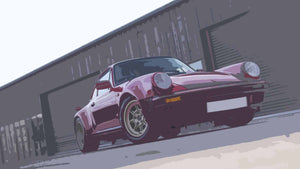


Porsche 928 Buyer’s Guide: Models, Running Costs & What to Check Before You Buy
The Porsche 928 is one of those cars that makes much more sense once you stop comparing it with a 911.
It was designed around a completely different idea: a front-mounted V8, rear transaxle, long-distance comfort and high-speed stability wrapped in one of the most distinctive shapes of the late 1970s and 1980s.
Introduced in 1977 and produced until 1995, the 928 developed from the original 4.5-litre V8 into the 5.4-litre GTS, with numerous mechanical, electronic and chassis changes along the way.
Today that makes the 928 both fascinating and potentially complicated to buy.
A good one can be a wonderfully usable classic GT.
A neglected one can absorb a large repair budget before you ever get to the upgrades you had planned.
The key is not simply choosing the “best” model year.
It is buying the best individual 928 you can afford, understanding exactly which version you are looking at, and knowing which expensive questions need answers before money changes hands.
Already Own a 928 and Planning the Next Step?
Our 928 Performance & Upgrade Blueprint picks up where this buyer’s guide finishes.
It covers baseline restoration, wheels and tyres, suspension, brakes, exhaust, naturally aspirated V8 tuning, supercharging, transmission and driveline upgrades, strokers, turbo builds, engine swaps and UK/US budgeting.
Digital Edition
➡️ BUY THE 928 PERFORMANCE & UPGRADE BLUEPRINT EBOOK
Paperback Edition
➡️ BUY THE 928 PERFORMANCE & UPGRADE BLUEPRINT PAPERBACK ON AMAZON
Why the Porsche 928 Still Matters
The 928 was a genuinely radical Porsche.
Instead of the rear-engine layout associated with the 911, it used a front-mounted V8 connected to a transmission positioned at the rear of the car.
That transaxle arrangement helped give the 928 the stable, balanced character that became central to its identity.
The rear suspension was equally interesting.
Porsche's so-called Weissach axle was engineered so that suspension movement could subtly influence rear-wheel geometry, helping stabilise the car under load.
The concept worked.
In 1978 the 928 was named European Car of the Year, becoming the first — and still only — sports car to receive the award.
But historical importance is only half the attraction.
The 928 remains interesting to drive because it does something relatively few classics manage well: it combines genuine V8 performance with the ability to cover long distances comfortably.
That is what you should try to preserve when buying one.
Which Porsche 928 Should You Buy?
There is no single answer.
The 928 evolved considerably during its production life, and specifications also differ by market.
A European-market car and North-American car of apparently similar age may not have identical engine, emissions or management systems.
That makes identification important before purchasing parts — and before deciding whether one model is “better” than another.
Early 4.5-Litre 928
The original 928 established the basic formula.
Porsche's historical material quotes up to 240 PS, depending on market.
These early cars have a purity that later versions inevitably lost as power, equipment and complexity increased.
For some buyers, that is the attraction.
Buy on condition and originality rather than expecting it to perform like an S4 or GTS.
A properly running early 928 on appropriate tyres can be a lovely classic GT in its own right.
4.7-Litre 928 S / UK S2
The S brought a larger 4.7-litre engine and substantially more performance.
UK buyers will frequently encounter cars described as S2, so do not rely on a badge or advertisement alone when ordering mechanical or engine-management parts.
The important information is the actual engine, model year and market specification.
Earlier 5.0-Litre 32-Valve Cars
This is an area where US and European terminology can create confusion.
A North-American 32-valve 928 S is not automatically the same thing as a later S4.
Engine-management hardware changed during the life of the platform, which becomes particularly important if you later intend to tune the car.
Again:
Identify the actual car rather than buying parts by badge.
928 S4
For many buyers, the S4 represents an attractive middle ground.
The 5.0-litre 32-valve engine produced around 320 PS in Porsche's European reference material, while the body received the cleaner later styling.
There is strong specialist knowledge and parts support around the S4, and it provides an excellent basis for either a largely original GT or a sympathetic performance build.
928 GT
Introduced for drivers wanting a more sporting version of the later 928, the GT produced around 330 PS.
Good examples deserve careful consideration before substantial modification.
Original specification, history and rarity become increasingly relevant here.
928 GTS
The final major evolution of the 928 arrived with a 5.4-litre V8 producing around 350 PS.
The GTS gained the wider rear bodywork and represented the most developed factory version of the platform before production ended in 1995.
It is often the version enthusiasts immediately want.
It is also generally the car for which condition, originality and purchase price can make the biggest financial difference.
Do not automatically assume a GTS is the best 928 for you.
A really good S4 may be a better car to own than a compromised GTS purchased simply because it sits at the top of the hierarchy.
Buy Condition Before Specification
This is probably the most important piece of advice in the entire guide.
A cheap 928 is not necessarily an affordable 928.
These cars are now several decades old.
The purchase price is only one part of the ownership equation.
A higher-priced example with strong history, recent major maintenance and a knowledgeable owner can be much cheaper over the first few years than a bargain car carrying a backlog of deferred work.
When comparing two cars, ask:
-
What work has actually been completed?
-
Is there documentary evidence?
-
What still needs doing?
-
What has been modified?
-
Which faults are known?
-
Which expensive questions have not yet been answered?
The absence of an invoice does not prove that something is broken.
But the absence of evidence should not be treated as evidence that expensive work has already been done.
Service History: Read the Invoices, Not Just the Stamps
A stamped service book is useful.
Detailed invoices are better.
You want to understand what has actually happened to the car over time.
Look for records relating to:
-
routine servicing;
-
timing-drive work where applicable;
-
water-pump work;
-
cooling system repairs;
-
fuel hoses and lines;
-
brake pipes and hoses;
-
suspension;
-
steering;
-
transmission servicing;
-
clutch replacement;
-
electrical repairs;
-
air conditioning;
-
tyres;
-
geometry.
A receipt simply saying “full service” does not automatically establish that every major age-related item was inspected or replaced.
Ask what was actually included.
Timing-Drive History
This is one of the areas where generic internet rules can cause confusion.
Do not rely on one universal statement such as “every 928 needs its belt every X years.”
Different engines and markets need to be treated according to their correct documentation and specialist guidance.
What matters when buying is that you can establish the history of the timing-drive work relevant to the exact engine.
Ask:
When was it done?
What exactly was replaced?
Was the water pump included?
What tensioning-system work was carried out?
Who performed the work?
If the history is unclear, ask a 928 specialist what should be budgeted for your particular car.
Do that before allocating the same money to wheels, suspension or an exhaust.
Engine: Judge the Car, Not Internet Folklore
The original article stated that a 928 could be expected to use a litre of oil every 500 miles.
We would not use a blanket rule like that.
Oil consumption needs to be assessed on the individual engine.
Check the level correctly, look through the service history and ask the owner how much oil the car actually uses between services.
Heavy smoke, new noises, persistent hesitation or poor hot running deserve investigation.
Equally, do not assume an engine needs rebuilding because somebody on a forum gave you a universal consumption number.
A specialist inspection should establish the mechanical condition of the car in front of you.
For a car being considered for substantial tuning, compression or leak-down testing may also form part of the assessment if the specialist considers it useful.
Cold Start and Hot Running
A 928 can behave perfectly when cold and reveal problems only once temperature builds.
Ideally, see the car before the seller starts it.
Listen to the initial start and watch how the engine settles.
Then make sure the inspection or test drive lasts long enough to see how it behaves fully warm.
Pay attention to:
-
idle quality;
-
hesitation;
-
warning lights;
-
coolant temperature;
-
hot restarting;
-
unusual smells;
-
leaks;
-
changes in engine behaviour.
A problem that appears consistently only when hot is still a problem.
Do not assume it will disappear after a service.
Cooling System
Cooling deserves proper attention on any 928 purchase.
Start with evidence.
When the engine is completely cold, inspect the coolant level according to the handbook and look for visible leakage, staining or dried residue.
During the drive, monitor the temperature behaviour.
If a car runs hot in traffic but behaves differently at speed, that is useful diagnostic information.
It does not automatically mean it needs a larger radiator.
The cooling system should be diagnosed before it is “upgraded.”
Never open a hot cooling system to investigate.
If the car genuinely overheats during the viewing, stop the test rather than continuing to see whether it gets worse.
Fuel System
Age matters as much as mileage here.
Fuel hoses, connections and related components deserve inspection on cars now several decades old.
If you smell fuel, treat it seriously.
Do not restart the engine repeatedly trying to locate a suspected leak.
Have it inspected.
For a prospective buyer, the important question is whether the car has been maintained preventively or simply repaired whenever something finally failed.
Automatic Transmission
A large proportion of 928s are automatics, and that should not automatically put you off.
The automatic suits the car's grand-touring character extremely well when it is operating correctly.
Assess behaviour both cold and hot.
Pay attention to:
-
delayed engagement;
-
unusual flare in engine speed;
-
harsh or inconsistent shifts;
-
slipping;
-
vibration;
-
leaks;
-
service history.
If engine speed rises without the expected acceleration, establish whether the transmission actually changed gear or whether there may be a loss of drive.
Do not repeatedly provoke a suspected fault during the test drive.
On relevant automatic cars, a knowledgeable specialist may also want to assess the flexplate/crankshaft-thrust situation as part of a pre-purchase inspection.
This is exactly the kind of model-specific question that makes a specialist PPI valuable.
Manual Transmission and Clutch
Manual 928s are particularly desirable to some enthusiasts, but rarity should not stop you inspecting them critically.
Check the quality of the shift and the clutch operation.
If the lever feels vague even with the engine switched off, linkage wear may deserve investigation.
If gears become substantially harder to engage with the engine running, the clutch and release system may need attention.
Listen for driveline noises and be wary of any seller telling you that an unpleasant shift quality is simply “how they all are.”
A healthy manual 928 should still be enjoyable to operate.
Suspension: Old Does Not Automatically Mean Bad Design
The 928's suspension is fundamental to the character of the car.
It should feel composed, stable and confidence-inspiring rather than simply stiff.
Age can complicate that.
A car may continue moving after a dip because the dampers are tired.
A sharp impact may be transmitted into the cabin because of deteriorated mounts, incorrect components, poor tyre choice or reduced suspension travel.
A knock may come from one worn joint rather than a need to replace the entire suspension.
When inspecting a car, look for:
-
leaking dampers;
-
broken or mismatched springs;
-
worn bushes and mounts;
-
unusual ride height;
-
tyre contact;
-
uneven wear;
-
suspension noises.
A 928 that wanders or needs repeated corrections does not automatically need coilovers.
Start with tyres, steering condition and geometry.
The Weissach rear suspension was engineered with compliance for a reason.
Wheels, Tyres and Geometry
Tyres can tell you a great deal about the car.
Check all four for:
-
manufacturer and model;
-
size;
-
age;
-
load and speed ratings;
-
pressure;
-
cracking;
-
damage;
-
uneven wear.
A car wearing an appropriate, well-matched set of quality tyres sends a different message from one with four unrelated budget tyres.
Uneven wear can indicate geometry or suspension issues.
It is a clue, not a diagnosis.
Larger aftermarket wheels are not automatically a problem either.
But check:
-
width;
-
offset;
-
brake clearance;
-
tyre clearance;
-
spacers;
-
rolling circumference;
-
signs of rubbing.
If the car has been modified, ask whether the original wheels come with it.
Brakes
The 928 is a heavy, powerful GT, so the brakes deserve a proper inspection.
Do not judge them solely on how impressive the calipers look through the wheels.
On the test drive, check whether the pedal is consistent and whether the car stops straight.
Pay attention to:
-
soft or sinking pedal;
-
pulling;
-
vibration;
-
warning lights;
-
grinding;
-
changes after repeated braking.
A pedal that becomes longer as heat builds warrants investigation.
So does a brake system that performs differently from one side to the other.
Healthy original brakes may be perfectly suitable for the way you intend to use the car.
The important thing when buying is condition.
Steering
A 928 should feel stable rather than nervous.
If it constantly follows ruts or needs small steering corrections, investigate the tyres, geometry and steering condition.
Check for play, unusual weighting and leaks.
Power-steering problems can become expensive, so visible fluid loss or an obviously noisy system deserves specialist attention.
Rust, Corrosion and Body Condition
The 928 benefited from extensive corrosion protection, but age, accident repairs and decades of use still matter.
Inspect the underside rather than assuming that a clean upper body means a structurally perfect car.
Look carefully around:
-
suspension mounting areas;
-
underside seams and structural points;
-
sills;
-
jacking areas;
-
wheel housings;
-
previous repairs.
The 928 also uses aluminium for several exterior panels, including the bonnet, doors and front wings.
That means body inspection is not simply a conventional rust hunt.
You are also looking for accident damage, filler, distorted panels, poor repairs and colour mismatch.
A paint-depth gauge can help when used intelligently.
Panel fit and repair quality matter more than whether a forty-year-old car has ever received paint.
Water Leaks
Do not overlook the hatch, sunroof where fitted, and cabin seals.
Lift carpets where practical and look for dampness.
Check the luggage area and spare-wheel area.
Persistent water entry can create electrical problems as well as corrosion and unpleasant interior damage.
A slightly damp carpet is not necessarily a small cosmetic problem.
Find out where the water is coming from.
Electrical Systems
The 928 was a sophisticated car when new.
That means you should operate everything.
Do not accept a seller's explanation that something “probably just needs a fuse” without pricing the possibility that it doesn't.
Check:
-
exterior lights;
-
pop-up headlamp operation;
-
instruments;
-
warning lights;
-
electric windows;
-
central locking;
-
seats;
-
mirrors;
-
sunroof;
-
heater;
-
air conditioning;
-
fans;
-
switches;
-
stereo installation.
One non-working electrical item is manageable.
A car where numerous electrical systems have gradually stopped functioning can tell you something about the standard of previous maintenance.
Be particularly wary of poorly executed aftermarket wiring.
Interior Condition
A good 928 cabin is a significant part of the car's appeal.
Restoring a badly neglected interior can be expensive.
Check the condition of:
-
seats;
-
dashboard;
-
headlining;
-
carpets;
-
door cards;
-
switches;
-
trim pieces;
-
luggage-area trim.
Cosmetic wear can be acceptable on an otherwise excellent car.
The question is whether you have priced the condition honestly.
Verify Exactly Which 928 You Are Buying
This becomes especially important with rarer versions.
Do not rely solely on the seller's description of the car as an S, S2, S4, GT, SE, Club Sport or GTS.
Confirm the VIN, model year, original market, engine and transmission identification where appropriate.
Look through the paperwork.
Special cars deserve special scrutiny.
The rarer and more valuable the variant, the more important provenance becomes.
Modified 928s: Good or Bad?
Neither.
A modified car should be judged on the quality and coherence of the work.
Some of the best 928s have sympathetic upgrades that make them better to use.
Others have accumulated decades of unrelated modifications from multiple owners.
Ask:
What was changed?
Why was it changed?
Who supplied the parts?
Who fitted them?
Is there documentation?
Can the car be returned to standard?
Are the original components included?
A properly developed suspension setup or exhaust is not automatically a warning sign.
Unexplained wiring, unidentified chips, improvised fuel systems and undocumented forced-induction modifications deserve much more caution.
What Does a Porsche 928 Cost to Maintain?
There is no useful universal annual figure.
One car may need little more than routine servicing.
Another may require years of deferred maintenance immediately after purchase.
That is why we prefer to think in terms of work packages rather than telling every prospective owner to budget an arbitrary annual amount.
For context, our 928 research found a January 2025 UK specialist menu listing an S4 12,000-mile service at £635, with a cambelt during that service at £650 and a water pump during the belt work at £475, all before VAT. Those are dated examples rather than current universal prices, but they demonstrate how quickly catch-up maintenance can become a four-figure exercise.
The same applies to suspension, tyres and other jobs.
The book's November 2026 pricing research found, for example, UK and US specialist/supplier examples for timing work, tyres and suspension that varied substantially depending on whether the figure represented parts only or a complete installed job.
When comparing cars, price the whole job, including:
-
parts;
-
labour;
-
VAT or sales tax;
-
setup;
-
alignment;
-
shipping/import costs where relevant;
-
related work discovered once the car is apart.
That is far more useful than deciding every 928 costs exactly £2,000 per year to own.
Pre-Purchase Inspection: Probably the Best Money You Will Spend
If you are serious about a particular car, get it inspected by somebody who understands the 928.
A general inspection is better than nothing.
A specialist who knows where the model hides its expensive problems is better.
Give them the opportunity to inspect the car properly.
Ask for the findings to be separated into:
Safety or roadworthiness issues
Maintenance due now
Maintenance likely soon
Cosmetic issues
Optional improvements
That turns a vague inspection into a usable ownership budget.
It can also give you evidence for negotiation.
The Test Drive: What Should a Good 928 Feel Like?
A well-sorted 928 should feel like a GT.
It should not feel fragile, loose or nervous.
The engine should behave consistently as it warms.
The steering should settle into the road rather than require continuous correction.
The brakes should be predictable.
The suspension should control the body without making every surface imperfection feel like an impact.
The transmission should perform consistently.
And perhaps most importantly:
The car should make you want to continue driving it.
That is what the 928 was built to do.
Should You Buy a Cheap 928 and Restore It?
Possibly.
But only if the restoration itself is part of what you want.
Do not buy a cheap car believing it will automatically be cheaper than buying a good one.
Start with three numbers:
Purchase price
Known immediate work
Contingency for what has not yet been discovered
Then compare that total with better cars already on the market.
A project car can make perfect sense when you want the project.
It makes much less sense when what you really wanted was a usable GT for next weekend.
Which 928 Would We Buy?
We would buy on condition, history and intended use before simply choosing the most prestigious badge.
A well-sorted early car can have enormous charm.
An S or S2 can deliver a compelling mixture of early styling and stronger performance.
The S4 makes an excellent all-round basis for ownership and sympathetic modification.
The GT is particularly appealing to drivers who value its sporting specification.
And the GTS represents the ultimate factory development of the platform.
But a neglected GTS is still a neglected car.
A beautifully maintained S4 can be the better purchase.
Bought the Car? Decide What Kind of 928 You Want to Build
Once you own a healthy example, the next question changes.
It is no longer:
Which 928 should I buy?
It becomes:
What do I want this 928 to do better?
Perhaps you want to preserve it as a relaxed long-distance GT.
Perhaps you want sharper control on familiar roads.
Perhaps you want more V8 sound.
Perhaps the original engine is healthy but you want stronger midrange performance.
Or perhaps you want to move into supercharging, turbocharging, a stroker engine or an engine swap.
Those are completely different projects.
That is exactly why we created the Retro Outlaws 928 Performance & Upgrade Blueprint.
928 Performance & Upgrade Blueprint
The full guide takes the next step after purchase, covering 12 detailed chapters plus a quick-reference appendix. Its structure starts with identifying the exact 928 and recovering the performance already present before moving into wheels, tyres, suspension, brakes, exhaust, naturally aspirated tuning, forced induction, transmission, complete build planning and major engine projects.
Digital Ebook
The digital edition is ideal for researching a build, comparing options or keeping alongside your project.
➡️ BUY THE 928 PERFORMANCE & UPGRADE BLUEPRINT EBOOK
Paperback
Prefer a physical book for the garage, workshop or bookshelf?
➡️ BUY THE 928 PERFORMANCE & UPGRADE BLUEPRINT PAPERBACK ON AMAZON
Final Thoughts
The Porsche 928 should not be bought because somebody told you values are rising.
It should be bought because you want what the car does.
A V8 in the nose.
A transaxle at the rear.
A chassis engineered for stability.
A cabin designed for distance.
And a shape that still looks remarkably unlike almost anything else on the road.
The good news is that a properly maintained 928 can still deliver the experience Porsche intended decades after it left the factory.
The challenge is finding one where the condition and history support the asking price.
Do not buy the badge.
Do not buy the mileage.
Do not buy the seller's list of things they say have been done.
Buy the evidence.
Choose the best individual car you can afford, establish what it needs, and keep enough budget in reserve to put it right.
Then drive it.
And once you know exactly what you would like it to do better, start modifying from there.